
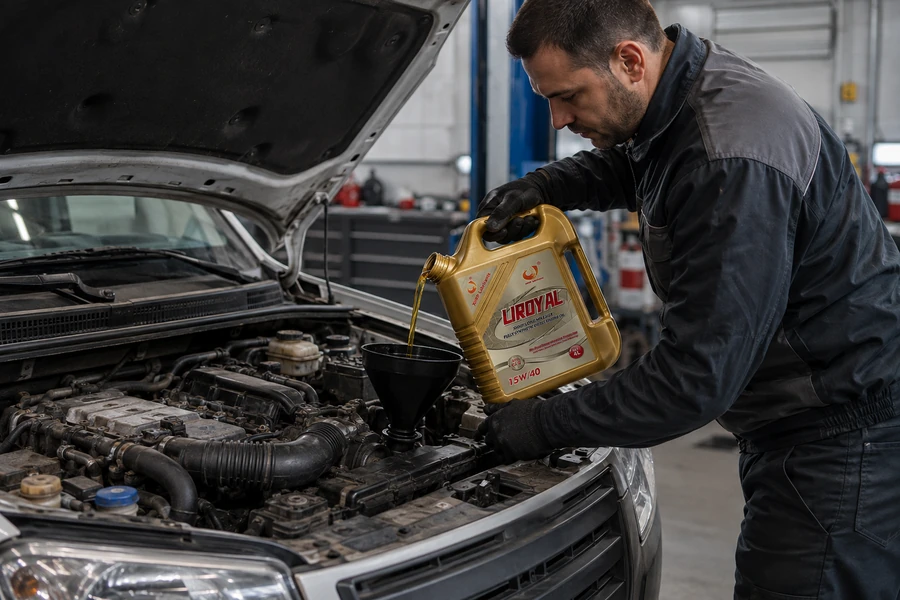
Selecting diesel engine oil for a fleet is a specification decision before it is a purchasing decision. Vehicles can differ in engine design, service conditions and maintenance requirements, even when they perform similar work. A clear selection process helps workshops identify where one product can be considered and where separate lubricants are needed.
Start with the Manufacturer's Requirements
Check the engine or vehicle manual for the required viscosity grade, performance category and any manufacturer-specific requirements. Keep these details together: a viscosity grade alone does not describe the complete performance requirement. For mixed fleets, prepare a vehicle-by-vehicle list instead of assuming that every diesel engine can use the same oil.
Separate Viscosity from Performance Category
Markings such as 15W/40 and CJ-4 describe different aspects of an engine oil. The first identifies a viscosity grade; the second identifies a diesel-engine-oil performance category. Neither is a stand-alone promise of suitability for every engine. API also distinguishes categories that are not interchangeable, making the engine manufacturer's recommendation essential when considering substitutions.
The supplied XHNP LIROYAL packaging identifies a fully synthetic diesel engine oil with CJ-4 and 15W/40 markings in a 4-litre container. Use those details to identify the product, then confirm its current technical specification and any required approvals for the intended application. Packaging colour and product positioning do not replace that comparison.
Account for the Way the Vehicle Works
Review the operating conditions covered by the manufacturer's maintenance schedule. Share the vehicle model, engine details and service pattern with the person responsible for lubricant selection. Where vehicles work under different conditions, keep those differences visible rather than applying a single assumption across the fleet.
Do not extend an oil-change interval simply because a product is described as synthetic or long mileage. Follow the applicable equipment guidance and any properly established maintenance programme. Product selection and service timing are related decisions, but they are not the same decision.
Make Purchasing and Servicing Consistent
Use the confirmed product name and specification on purchase orders, storage labels and service records. Check that the delivered grade matches the order before it enters workshop stock. Where several oils are used, clear identification helps technicians select the intended product for each vehicle.
A practical fleet lubrication plan combines the correct specification, consistent product identification and an appropriate service schedule. That gives purchasing and workshop teams a repeatable basis for maintaining vehicles as the fleet grows or changes.